US Shoppers Feel Insecure After Reading About Retailers’ New AI Tools
Artificial intelligence is transforming the way US retailers set prices, but the rise of digital price tags and artificial intelligence is challenging price rules, privacy and transparency for consumers.
American shoppers are becoming increasingly concerned with what tools US retailers use to determine the cost of goods, clothing and other everyday essentials at grocery stores and other shopping venues. As some of the major retailers begin rolling out digital price tags and artificial intelligence tools for pricing decisions, there is growing uncertainty over whether technology could cause prices to be less predictable, or if new techniques will empower businesses more effectively to take advantage of their customers.
The issue reignited on October 18, 2026 after an Associated Press news piece regarding concerns of American consumers about pricing tactics used increasingly by the country’s retailers. The issue stems from debates over the value of dynamically, algorithmically and individually-priced goods at stores.
While businesses argue that these emerging pricing approaches could enhance efficiencies and adaptability in determining cost while reducing the workload necessary to update prices, consumer activists seek greater transparency over how prices are determined and how the technology could impact the offers displayed to certain customers. Source: Associated Press reporting.
How AI is Changing Retail Prices in the US
Retailers have used algorithms to identify competitive costs, demand and adjust prices for years at a time. Artificial intelligence can expand the ability of businesses in this arena to identify patterns within a greater quantity of information which could influence purchasing.
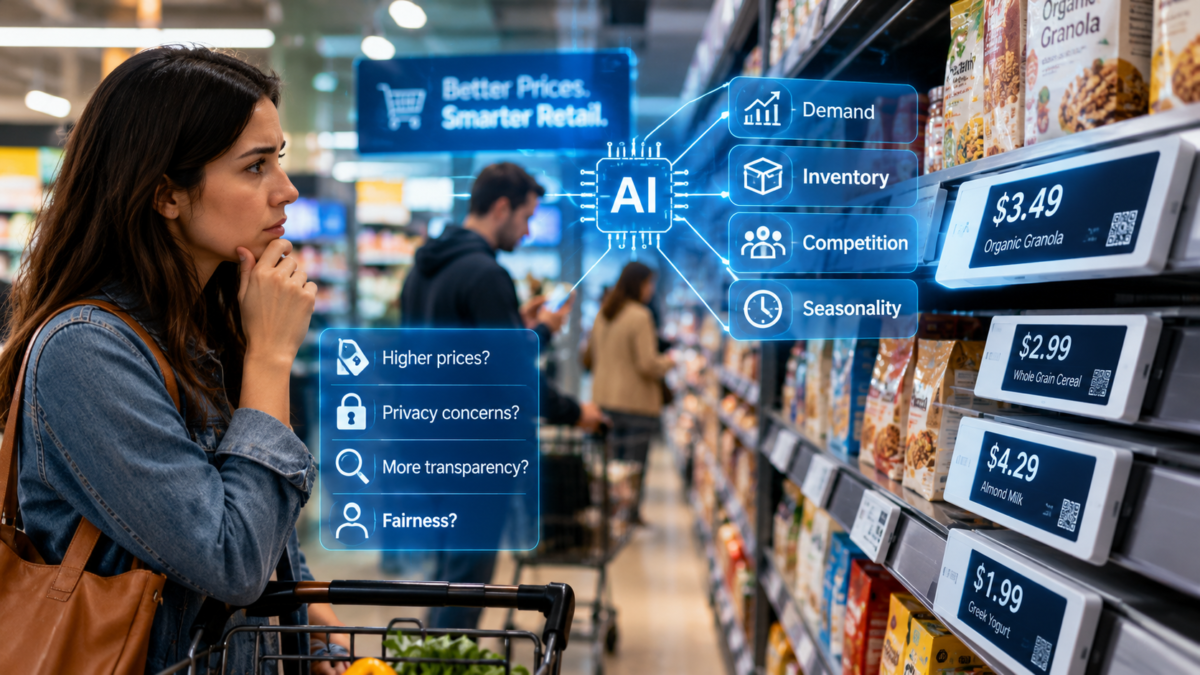
AI-assisted pricing can take into account factors such as past sales, inventory, competitor costs, seasonal purchasing and consumer response to promotional opportunities. Retailers can utilize these insights to recommend, control and adjust pricing strategies along with discounts and other approaches to clear out excess inventory.
While beneficial for a company’s bottom line, an important question for shoppers is to ask themselves if AI is going to enable prices at stores to be more competitive, or will it cause cost to be less predictable for everyday purchases?
The answer is dependent upon how retailers program these systems and what information they allow the technology to utilize.
According to a January 2025 Federal Trade Commission staff report, companies offering personal pricing tools could utilize things such as surfing activity, location, and shopping history. The research revealed concerns about how personal information may influence the price or promotion that is offered to shoppers. Read the FTC report.
Electronic price tags trending at US grocery shelves
A visible change which has taken the US retail space by storm is the increase in popularity of electronic shelf labels. These devices are capable of replacing traditional price tags.
By utilizing these digital technologies, retailers are better able to update prices on shelves, and do not require clerks to manually change these signs. Thus, prices can be adjusted more swiftly and this technology can reduce the labor costs of maintaining correct shelf inventory.
Major US retailers, including Walmart and Whole Foods, have attracted attention of late as electronic shelf tags have gained wider traction in the American retail landscape.
However, digital price tags have also fueled concerns that retailers could utilize this technology to adjust prices often, and do so frequently during demand surges.
Retailers have countered the impression that electronic tags automatically lead to high prices. Walmart CEO John Furner has responded claiming Walmart’s pricing tags are focused on efficiency and updates, not charging more based on the weather, time of day or individual shoppers.
The contrast is important here, because although the technology makes price changes easy for a retailer, their actual price policy dictates whether surge pricing or personal data is utilized.
Dynamic and Personalized Pricing is Not the Same Thing, Explained
Part of what fuels the confusion around artificial intelligence-assisted retail pricing is the conflation of practices which fall under a similar umbrella.
What is dynamic pricing?
It is pricing practices which involve changing the costs of a good or service in accordance with market or environmental conditions. Airlines and ride-hailing services already utilize a form of this tactic. For example, prices can increase when there is an opportunity to fill an empty seat, or demand has risen while there is a decrease in supply.
Retailers are also capable of utilizing algorithms which guide cost setting decisions as market conditions have changed. Thus, retailers can increase or lower cost depending upon what is transpiring in the market.
What is personalized or surveillance pricing?
Personalized pricing involves offering different prices or discounts to different customers based upon information about them or a prediction of their buying behavior. In accordance with the system, relevant information may vary and include location, browsing activity, purchase history or inferences about one’s preferences.
Although raises privacy concerns, different prices do not necessarily indicate that personal information is in use. Price differences can also occur due to promotions, location differences, store inventory condition, or pricing experimentation.
This is something important to note in order to understand what claims about AI-driven pricing are doing.
Why US Consumers are Concerned About AI Pricing
This wave of concerns from consumers come as a time when American budget-conscious households remain extremely sensitive to food costs and other everyday expenses. They want to know whether a given price at a store is an accurate reflection, whether the price is higher elsewhere and whether the shops utilize private data to dictate the cost for individual shoppers.
Three issues stand out in this debate.
- Price Transparency: Customers may have difficulty understanding why prices change or are discounted. By providing few details, the risk is that customers lose faith that a price being displayed is accurate.
- Consumer Privacy: Personalized pricing can take advantage of the information that consumers are utilizing their website or app to provide. Thus, they may become quite concerned if their data is contributing toward different or increasing prices they are being charged.
- Unequal Treatment: If two consumers are being charged different rates for the same good under similar circumstances, questions arise about whether a difference in terms is warranted. Consumer advocates claim that the rules behind the pricing of a product should be apparent, and that automated approaches should ensure that no unfair advantage is created when it comes to a customer in comparison to another.
These concerns do not imply every AI pricing system is unfair. They reflect why transparency is essential when it comes to the practices that a retailer implements.
FTC Oversight and Calls for More Regulation
US regulators have also evaluated the correlation between consumer data and individualized pricing. In January 2025, the Federal Trade Commission released preliminary findings of its surveillance-pricing market study. By analyzing ways in which third party intermediaries could utilize data about consumers to enable businesses to tailor offers and pricing.
The study reveals concerns with using personal characteristics and behavioral information in determining personal pricing, as well as emphasizing the need to understand how such these systems operate and will affect competition and consumer well being.
Meanwhile, legislatures have considered measures addressing algorithmic and individualized pricing including bills which focus on disclosure and restrictions of the utilization of consumer data. The debate surrounding regulation will continue to be key as more companies incorporate AI into their decision making process. Policymakers will need to determine how to protect buyers without being unnecessarily inhibiting of technologies which are enhancing efficiency and creating legitimate discounts for some goods or services.
For retailers, greater disclosures and standard price rules for products could help prevent unnecessary consumer hesitation.
Can AI Pricing Be a Benefit to Shoppers?
Although there are certainly concerns with automated methods, artificial intelligence is not all of a threat to consumers. Retailers can take advantage of these approaches to identify overstock items, better forecasts and targeted discounts. More accurate forecasting may not only help a business to reduce waste, but also help to improve their bottom line if they are better able to match supply and demand.
Algorithms can follow competing business’s prices and help businesses to better adapt to the evolving market conditions. In a highly competitive space, those efficiencies may allow for a reduction in overall cost or enticing promotions which benefit a customer.
However, this is contingent at what approach the company utilizes. A system focused on inventory management is not the same as one focused on personalization.
Consumers want a way to be able to understand the prices they are offered and verify the checkout price is the one represented by any label.
Clearer labels, disclosure and efficient complaint mechanisms will help ensure that a company doesn’t sacrifice consumer confidence for its own efficiency.
What Can Shoppers Do To Help Their Budgets?
With the rise of AI-assisted pricing decisions, consumers can take a few practical steps to ensure they are obtaining the right offers.
- Comparing Prices: Comparing the same items across multiple retailers ahead of a purchase will yield the best price.
- Reviewing Checkout Price: Shoppers should review their final price before checking out in person or by clicking “confirm” if completing a remote purchase.
- Knowing Whether Loyality Discounts Apply: Verify that any special discount applied is not an add on requirement, or one needing to complete specific requirements prior to taking advantage.
- Checking Website Privacy Policies: Understanding what information a website or a shopping application collects and utilizes is essential.
- Keeping Receipts or Screen Shots Ready: If a consumer notices the final checkout price is different than the price represented, keeping that receipt in hand along with a phone screen shot is helpful if they need to address this discrepancy with the retailer.
These will not completely resolve concern and controversy, but they can enable shoppers to be aware of deceptive offers.
The Future of AI-Powered Retail Pricing
AI is becoming a more prominent tool which is utilized to aid in many aspects of a business, from inventory management to recommendations as well as market predictions and price optimization. As technology becomes more helpful to determine the most competitive price, concerns are sparked over the potential that retailers are taking advantage of it to manipulate pricing practices.
The fundamental debate comes down to a retailer not being transparent or honest, rather than whether they are using the technology altogether.
As digital shelf tags and other approaches which enable a retailer to update prices in real time gain popularity, the balance between business efficiency and consumer advocacy will continue to be a crucial area of focus for the US retail industry.
Conclusion
Growing consumer concerns about AI-assisted pricing can be seen as a broader debate of the influence on tech on every day pricing.
Digital shelf labels can allow retailers to update pricing in a simplified fashion. Artificial intelligence can enhance the capacity which retailers have to make informed commercial decisions. However, practices involving personalization, use of consumer data and the fear of unequal pricing could cause consumers to lose faith in the value of this technology. For businesses, transparency over practices will enable them to achieve benefits of this technology while still having a loyal customer base.