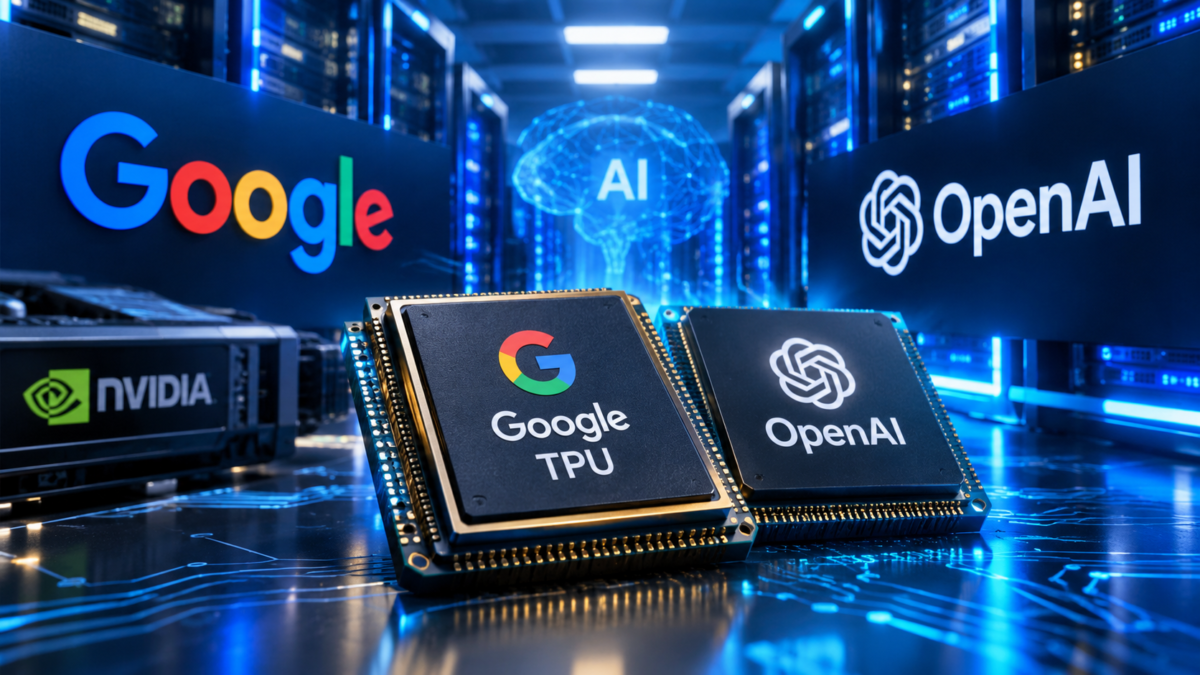
OpenAI is reportedly looking to buy Google AI chips as the ChatGPT firm looks to increase its computing power, potentially increasing its ties with a major rival and increase competition in the AI chip space.
It comes amid a growing trend in the AI industry with tech giants looking to diversify away from using Nvidia chips to train and run their complex AI models.
According to a report by The Information on October 27th, 2026 OpenAI is planning to purchase Google AI chips. This was reported by Reuters citing a source close to the matter. No further details were provided about the financials of the deal. Neither company have confirmed the deal.
Why Would OpenAI Want To Purchase Google AI Chips?
Running and developing advanced AI models requires significant computing power. This means companies need powerful processors, data centre space, electricity and infrastructure.
While OpenAI has a large reliance on Nvidia GPUs to run their AI models, increasing their access to Google Tensor Processing Units could be another option for them.
TPUs are specialised chips that Google has developed for machine learning tasks. They’re used in their AI infrastructure and are increasingly being sold to third parties.
By having more hardware options, OpenAI can ensure they have enough computing power to run their models. It can also reduce their reliance on any one provider and potentially improve the economics of running AI.
However, this will depend on the details of the deal, how much hardware they can get, the performance of the chips and how much it costs to integrate Google hardware.
What Are Tensor Processing Units?
Tensor Processing Units are specialised chips developed by Google.
They are specialised for machine learning tasks and unlike general purpose processors can perform many of the mathematical calculation required.
They are used to support Google’s AI offering.
With increased adoption of AI, Google are increasingly looking to use their bespoke chips as an alternative to Nvidia GPUs. They’ve also got other AI developers wanting to use their hardware such as Anthropic.
Having access to Google hardware could give OpenAI another option for running its AI models.
However, TPUs and GPUs are different ecosystems and will depend on what the AI model is being used for, what software is available and the performance and cost requirements.
OpenAI And Google Are Rivals But Also Partners
The fact that OpenAI wants to purchase AI chips from Google is interesting as they are rivals in several key areas.
OpenAI develops ChatGPT and advanced AI models. Google have their Gemini AI ecosystem, search engine and Google Cloud.
However, they have formed some business partnerships.
Recently OpenAI announced they will be making their advanced AI models available via Google cloud, as reported by Reuters.
If they do go ahead with purchasing any chips, it shows how companies that are competing for AI clients can still have a reliance on each other.
It also shows how AI companies are needing to have more options available to them. They need access to multiple providers, cloud platforms and specialised processors.
Nvidia Face Increased Competition
Nvidia have become the go-to provider for AI computing. Their GPUs are widely used to train and run advanced models.
They also have a mature software ecosystem to help developers build their AI applications.
However, large tech companies are looking to diversify their offerings.
Google are increasing their TPU offering. Other tech firms are developing their own bespoke processors.
OpenAI have also been working with Broadcom to develop their own bespoke AI chip. As reported by Reuters.
While purchasing Google chips doesn’t necessarily mean they’re moving away from Nvidia, it shows how major AI developers are increasingly looking for a mix of computing.
In the long term this will be an issue for Nvidia as their clients get access to alternative chips.
Increased Investment In AI Infrastructure
The purchase comes as tech firms are investing heavily into their infrastructure to support the growth in their AI services.
Amazon, Microsoft and Alphabet are set to invest up to $600 billion into AI infrastructure in 2026, as reported by Reuters.
This shows how much investment is going into building data centres, getting advanced chips, expanding cloud computing and running AI models.
While this presents opportunities for chip manufacturers and cloud providers, there are questions about whether the investment will pay off with future revenue from AI.
Companies like OpenAI and Google are placing increased focus on getting computing power. Having access to enough hardware at a competitive price can impact how they develop their products, what services they offer and how profitable they can be.
However, it does present a risk in investing so much in this area. If demand doesn’t grow as quickly as expected or computing power becomes less valuable with newer chip technology.
How Will This Impact AI Users?
If OpenAI do increase their use of Google TPUs, this will depend on how they use them.
Having more computing power can help them support more users, efficiently run their AI models and increase their services. Having a better economics around their infrastructure can give them more option in pricing their products.
However, it doesn’t automatically mean they’ll be faster, cheaper to subscribe to or improve the accuracy of their AI.
This will depend on many factors such as how the model has been designed, how optimised their software is, how much it costs to run their infrastructure.
Overall it should be seen as just an update to the infrastructure behind their AI.
What’s Next?
Ultimately, we need to see whether OpenAI will go ahead with the purchase. How many chips are they looking to purchase? How will they use the hardware?
No details have been provided about the financials or delivery.
Investors will also be watching to see if Google can turn their AI chips and cloud division into a genuine revenue stream from third parties.
Nvidia will also be interesting to watch as they face increased competition.
Overall this shows how the AI industry is becoming more intertwined. Companies can work together with their cloud offerings and hardware but still be competing.
Conclusion
The report that OpenAI is looking to purchase Google AI chips could represent another key moment in the battle for computing power for AI.
It could increase the business relationship between two major AI rivals. It will also give them another option to use alongside Nvidia GPUs and their own development.
Overall it shows how important the infrastructure is becoming for AI. With increased demand, having access to efficient chips, scalable computing and affordable data centres could become increasingly important in determining who leads the next phase of the AI industry.
We’ll keep an eye on the developments with AI chips, OpenAI, Google, Nvidia and the global tech industry.