
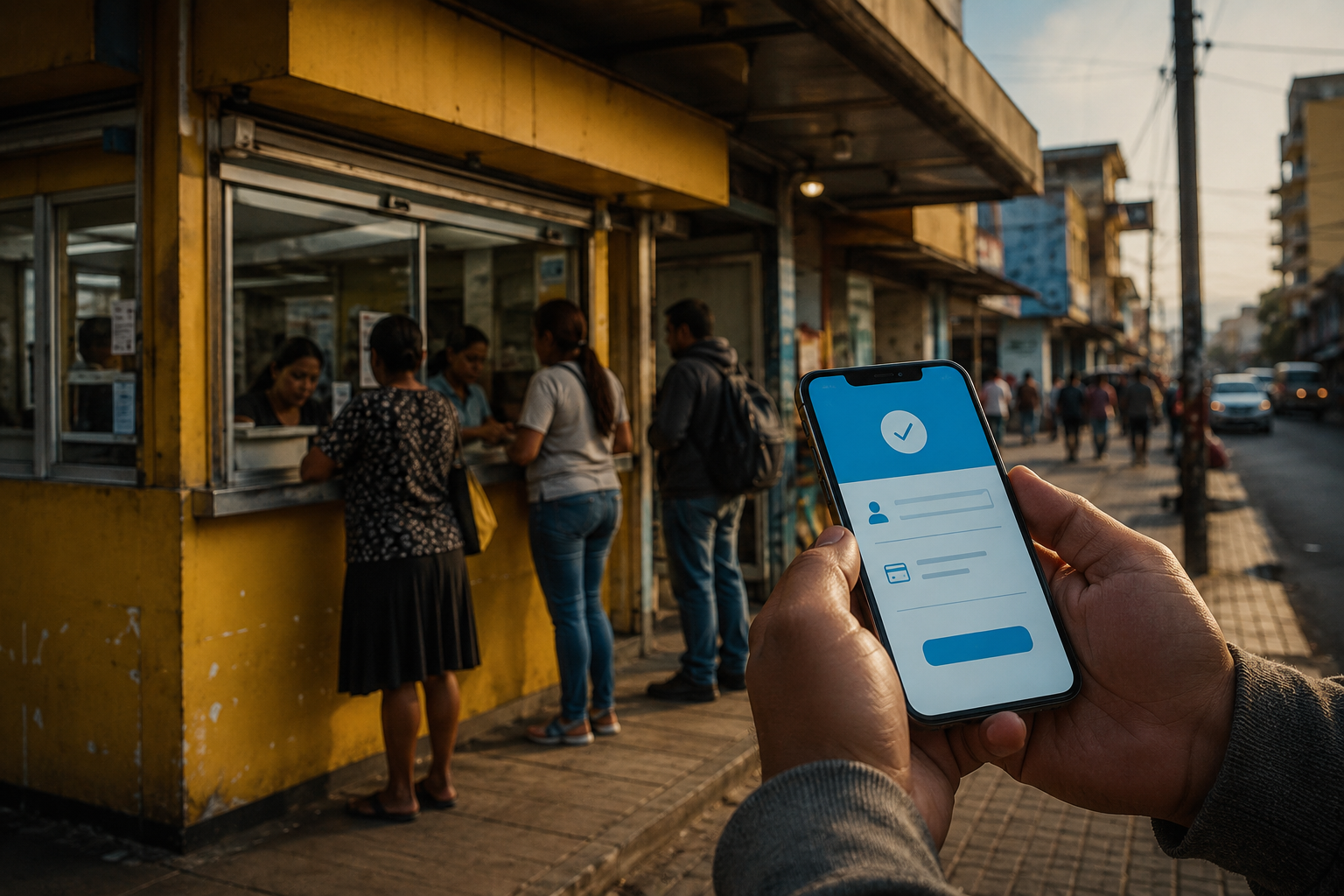
Western Union’s plans to bolster its Latin America remittance business via a blockbuster acquisition are encountering headwinds. A year after announcing the deal, Western Union faces the deterioration of the target’s financial fundamentals, increased competition from fintechs, lingering U.S. immigration policy pressures, and a drawn-out regulatory review of the deal. These combined forces are undermining the rationale for the acquisition, leaving strategists at Western Union and Wall Street wondering about the value of such a big bet on a retail-centric remittance business in an era of digital disruption.
A Year Later, Western Union Remembers Why the Latin America Acquisition Made Sense
When Western Union announced its $500 million acquisition of Miami-based remittance company International Money Express (Intermex) a year ago, Western Union executives cited the need to gain scale in the intensely competitive U.S.-Latin America remittance corridor, as well as a desire to use an acquisition to supplement Western Union’s own retails agent network and bolster its presence in the fragmented Latin American region. A year later, Intermex’s financial performance, combined with a challenging macro environment for remittance, has prompted a number of analysts to question the wisdom of the acquisition and the value of Western Union’s insistence on a retail-based remittance model at a time when digital disruptors are drawing away customers and capital.
Deteriorating Fundamentals at the Target Undermine Western Union’s Latin America Aspirations
Intermex has struggled to maintain its revenue growth in the latest period, posting a 15% year-over-year revenue decline in Q1 and an 18% year-over-year drop in Q2 2024. The results highlight intensified competition for remittance volumes from digital-first competitors, as well as a challenging environment for the U.S.-Mexico corridor, which is a focal point for many in the remittance industry (Intermex is based in Miami and has a significant presence in the U.S.-Mexico corridor).
Citizens analyst David Scharf noted that Western Union expansion plans in retail remittance, outlined at the time of the Intermex acquisition, appeared to be “doubling down on a business model that is clearly losing favor with customers,” with Intermex’s results providing further evidence of that trend. He added that a worsening retail remittance environment is “not a reason to acquire a company in that space; it’s a reason to buy back shares.”
Meanwhile, Scharf argued that Western Union’s focus on the Latin America region through an acquisition of Intermex at the time was misplaced given intensifying competition from digital-only money transfer companies, which had hollowed out the profitability of remittance corridors. At the same time, Western Union has continued to face headwinds in its own U.S.-based retail remittance business, and the company’s Q2 2024 results, released this month, showed a 1% year-over-year revenue decline, with total revenue of $1 billion, just shy of analyst estimates.
A combination of deteriorating Intermex results, as well as the sluggish performance of Western Union’s own retail remittance business, has led to questions about the value of Western Union’s heavy investment in the Latin America corridor via the Intermex acquisition.
For now, Western Union appears to have little to say in response to the mounting skepticism. Western Union CEO Devin McGranahan noted on the July 30 earnings conference call that the company faces “persistent pressures on the retail business in Americas, increased agent commissions, and migration to digital payout accounts,” which were weighing on the company’s margins. These challenges add to the uncertainty over Western Union’s ability to turn around the retail remittance business it acquired with Intermex in the first place.
Two Factors Explaining Why Western Union’s Retail Remittance Business is Losing Momentum
Western Union’s woes in the retail remittance space can be attributed to two prevailing forces in the market: the rise of digital-first money transfer competitors and the impact of immigration crackdowns in the U.S.
Digital Peer Pressure
Digital money transfer services are drawing customers and profits from traditional remittance providers such as Western Union, which is forcing the firm to rethink its strategy and accelerate its investments in digital. Intermex’s results are a reminder that the migration to digital money transfer services is intensifying, with consumers, particularly millennials, favoring the convenience of apps and the lower fees offered by fintechs. Western Union, with its reliance on bricks-and-mortar agent networks and cash pickups, finds itself at a disadvantage in the digital age. With each passing quarter, Western Union finds itself in a worse position to compete with digital-first rivals for the loyalty of remittance-sending consumers, particularly in the U.S.
Immigration Crackdowns
Meanwhile, U.S. immigration crackdowns have contributed to a challenging environment for the retail remittance space, with policymakers in New York and California exerting pressure on banks to step up their scrutiny of cash-remittance businesses. Immigration tightening in the U.S. can have a direct impact on remittance flows, either by reducing the number of immigrants eligible to send money home, or by encouraging immigrants to find alternate, less transparent ways to send money.
The combination of these forces has led to intensifying scrutiny of Western Union, the dominant retail remittance provider.
Political Pressure Over the Acquisition Adds to the Challenges
In addition to questions about the underlying value of the Intermex acquisition, Western Union has encountered political headwinds in its efforts to complete the deal. At the same time, New York State’s Department of Financial Services (NYDFS) has yet to approve the transaction, making it the final regulator to review the proposed deal. According to Western Union CEO Devin McGranahan, on the July 30 earnings conference call, the company expects the acquisition to close on September 1, 2024, and that the company “remains actively engaged in discussions with regulators on the final approval.” Mr. McGranahan added that he is optimistic that the NYDFS will approve the transaction, despite pressure from New York City Mayor Zohran Mamdani to oppose the deal.
Mr. Mamdani is seeking to convince the NYDFS to reject the Intermex acquisition on the grounds that it will lead to higher prices for the Latino immigrants who rely on remittance services to send money to family members in Latin America. His position has created headwinds for Western Union in its efforts to complete the Intermex acquisition, which has been made more difficult by the souring of the business fundamentals at the target. Taken together, these forces could compel Western Union to either cancel or renegotiate the Intermex deal, depending on the circumstances.
Western Union’s Push to Digitize its Remittance Offerings
While Western Union faces a challenging environment for its own retail remittance business, the company has been working to pivot toward a digital-first strategy. In May 2024, the company launched its stablecoin, and a stablecoin-backed credit card called Stablecard. The initiatives are part of Western Union’s broader effort to participate in the digital economy, both by leveraging the benefits of stablecoins and blockchain settlement technology, as well as to attract younger consumers to its platform.
The strategy of balancing growth in the digital space with investment in its traditional retail remittance business leaves Western Union exposed to criticism from multiple fronts. By pursuing a diversified approach to remittance, Western Union finds itself in a worse position to respond to criticism on either front.
What Does it Mean if the Western Union-Intermex Deal Falls Apart?
It is not clear what would happen if Western Union’s efforts to finalize the Intermex deal fail, but a number of scenarios are possible. One possibility is that Western Union will seek to renegotiate the purchase price, in light of the deteriorating financial performance at Intermex, as well as the increased regulatory scrutiny of the deal. Alternatively, if the NYDFS continues to oppose the transaction, it could prolong the regulatory review of the deal. Or, most radically, Western Union may abandon the Intermex acquisition entirely, and instead use the capital to buy back shares, as some analysts have argued would make more sense given the souring prospects for retail remittance. Whatever the outcome, the signals sent by Western Union will reverberate throughout the remittance industry, with other players watching the situation closely to see how Western Union navigates the Intermex acquisition fiasco.
What does it all mean for the remittance industry?
Western Union finds itself at a crossroads as it seeks to navigate a challenging environment for retail remittance, punctuated by political headwinds and a difficult macroeconomic environment. The company’s efforts to acquire Intermex represent an effort to gain scale in the Latin America remittance market, which it views as strategically important. However, the value of that approach is being questioned at a time when Western Union’s own retail remittance business, as well as that of the target company, are underperforming. On top of that, Western Union is being pressured to accelerate its digitization efforts, with some arguing that it needs to pivot away from its reliance on agent networks and cash pickups. How Western Union responds to these competing forces will have implications for the remittance industry at large, as well as for the everyday consumers who rely on remittance services to send money to family members abroad.
In particular, the outcome of the Intermex acquisition will set a precedent for other remittance companies, which are observing the situation closely. Other remittance providers are looking to see how Western Union navigates the Intermex acquisition challenges, in order to determine how they, too, may respond to similar headwinds in the remittance sector. At the same time, ordinary remittance-sending consumers, who are vocal critics of Western Union and other big remittance companies, are watching to see whether the consolidation will lead to reduced competition and an increase in pricing, as critics such as New York City Mayor Zohran Mamdani have charged.

