
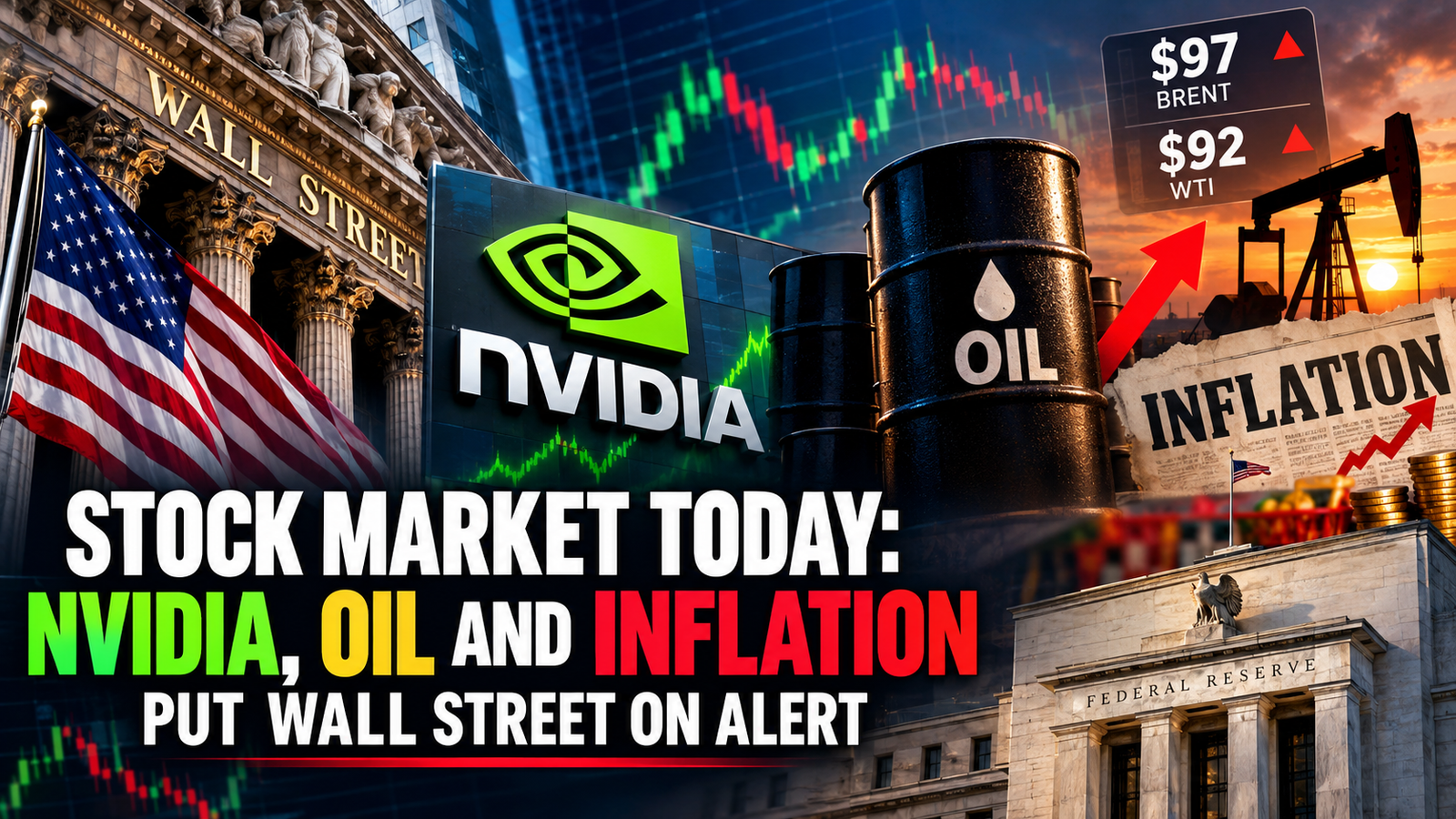
Wall Street is set to face an interesting week ahead, as traders weigh the booming shares of Nvidia and the artificial intelligence trade against oil prices, inflation, and the likelihood of higher interest rates.
The US stock market faces a challenging economic and geopolitical outlook as trading resumes in the fall of 2023. Escalating tensions between the US and Iran, strong American jobs data, and the prospect of persistently higher inflation all pressure investors who are growing more concerned about the future path of interest rates.
At the same time, investors speculate on whether technology stocks and the AI-driven economy can continue to thrive amid tightening financial conditions.
Wall Street Set For A New Test
The US stock market opens Monday in the midst of an interesting debate, regarding several key market dynamics. First among these is the rapid increase in crude oil prices, which threatens to drive inflation higher and force the Federal Reserve to keep interest rates higher for longer.
Crude oil prices have surged to near $97 per barrel, while U.S. West Texas Intermediate crude moved above $92 per barrel amidst tightening tensions in the Persian Gulf.
The rise in oil prices pressures the budgets of corporations, consumers, and governments, which reduces overall spending and puts downward pressure on stock prices.
Simultaneously, rising oil prices and concerns over Iran’s nuclear program drive demand for safe-haven assets, such as US Treasury bonds, which limits bond market losses and weighs on risk assets like cyclicals and technology stocks.
Why Nvidia Is In Focus For Investors
While rising oil prices and geopolitical tensions dominate macroeconomic headlines, Nvidia continues to draw investor attention as the focal point of the exciting but volatile technology and artificial intelligence (AI) sectors.
These themes dominate trading strategies on both sides of the desk as traders debate whether the unprecedented bloom in AI-focused capital expenditures can continue to drive stock prices higher despite sharply rising interest rates.
In particular, investors are growing increasingly fixated on whether artificial intelligence will continue to fuel a rapid expansion in capex, and whether the resulting economic backdrop will be supportive of equity prices.
Oil Prices Among Major Risks To Financial Markets
Oil prices figure to be a major contributor to inflation in the months ahead.
Brent crude recently crossed $97.37 a barrel, while U.S. crude traded near $92.57, as fears mounted that the Iranian nuclear program and a potential conflict with the US could disrupt energy supplies and shipping lanes in the Strait of Hormuz.
This waterway serves as a major shipping route for oil transportation, and any disruption to its security would drive up energy prices.
Higher oil prices would push higher the prices of goods and services in the economy, adding to inflation woes and complicating the Federal Reserve’s efforts to balance economic growth and price stability.
Jobs Data Fuels Higher Interest Rates Expectations
The booming American jobs market has also made investors anxious, as tightening labor markets push wages higher and fuel inflation. The combination of strong jobs growth and rising energy prices threatens to push inflation well above the Fed’s 2% objective.
The US labor market added 162,000 new jobs in August, exceeding forecasts, while the unemployment rate held steady at 4.1%. The strong labor market report has fueled expectations that the Federal Reserve will keep interest rates higher for longer, despite recession worries.
Higher interest rates typically hurt stocks, especially growth stocks, because future cash flows are significantly discounted at higher yields.
For fixed income investors, higher interest rates also hurt bond prices, particularly long-duration paper like 30-year Treasury bonds.
With that said, there is one more report that investors are anxiously waiting for – the latest data on inflation.
Inflation Expectations Set To Rise
Investors will be paying close attention to developments in inflation in the months ahead, as the behavior of this economic indicator will drive the future direction of interest rates and, by extension, financial markets.
According to CPI data for July, the year-over-year rate of inflation stood at 3.7%, beating analyst expectations of 3.6%.
Together with the recent American jobs report and rising crude oil prices, this economic indicator suggests that the central bank may have to take measures to curb inflation.
If this trend persists, higher interest rates will likely disappoint stock market investors.
Wall Street Warns Of Rising Treasury Yields
Yield curve data serves as a warning sign to stocks investors, who know that rising Treasury yields will hurt the valuation of many equities.
The yield on the 10-year Treasury note approached 4.8%, while the 30-year Treasury yield climbed above 5.2%.
Higher interest rates weigh on stock prices because future cash flows are significantly discounted at higher yields.
This is of particular concern to technology stocks, which tend to have long-duration cash flow streams.
How AI And Nvidia Influence The US Stock Market
Shares of Nvidia, semiconductor manufacturers, and data center infrastructure have rallied on the powerful AI-capex and technology theme.
While this trend is a critical support to the technology sector, its extreme concentration also poses a significant threat to the performance of the Nasdaq Composite and other technology indices.
As a result, whether the business climate for artificial intelligence infrastructure remains robust will be a critical determinant of Nvidia’s prospects as well as the overall performance of the US stock market.
Outlook: Will Higher Interest Rates Spell Disaster For Tech Stocks?
The main debate that will unfold over the next several weeks regards the debate over the future course of interest rates.
On the one hand, we have strong analyst expectations for accelerating corporate earnings and the powerful artificial intelligence and technology trade, represented by companies like Nvidia, Alphabet, Amazon, and Microsoft. On the other, we have the negative impact of rising crude oil prices on the prices of goods and services.
These factors will likely drive divergent performance across various stock sectors.
Here’s What Investors Should Watch For
The key developments that will shape the near-term outlook for the US stock market include:
- Crude oil prices: An increase towards or above $100 per barrel would boost inflationary pressures.
- US inflation: The consumer price index (CPI) data will shape investor expectations regarding interest rates.
- Treasury yields: Higher bond yields will hurt stock valuations.
- AI demand: A sustained increase in artificial intelligence infrastructure will support technology stock prices.
- Federal Reserve: The behavior of the federal funds rate will be critically important to financial markets.
- US-Iran tensions: Further escalation of this geopolitical conflict will damage energy prices and inflation.
Wall Street Wonders Whether AI Stocks Will Continue To Skyrocket
The US stock market is caught in a tug-of-war between a powerful artificial intelligence and technology trade and rising crude oil prices, which fuel inflation and higher interest rates.
As a result, the behavior of the Federal Reserve will be of utmost importance to traders who know that rising interest rates can severely constrain financial market performance.
Given the current confluence of market dynamics, investors wonder whether the technology and AI stocks continue to thrive at the expense of value stocks in the years ahead.
At present, the behavior of technology stocks is viewed by many market participants as a critical risk to the overall performance of the US stock market.
The Bottom Line
Nvidia, crude oil, and inflation are set to be three of the most important forces that will shape the performance of the US stock market in the months ahead.
Nvidia represents the powerful artificial intelligence and technology trade, which exerts a bullish pressure on the Nasdaq Composite and other technology indices.
Meanwhile, crude oil prices threaten to drive inflation higher, constraining the ability of the Federal Reserve to lower interest rates.
In particular, investors should watch out for developments in the American labor market, which is a crucial determinant of inflation trends.

