
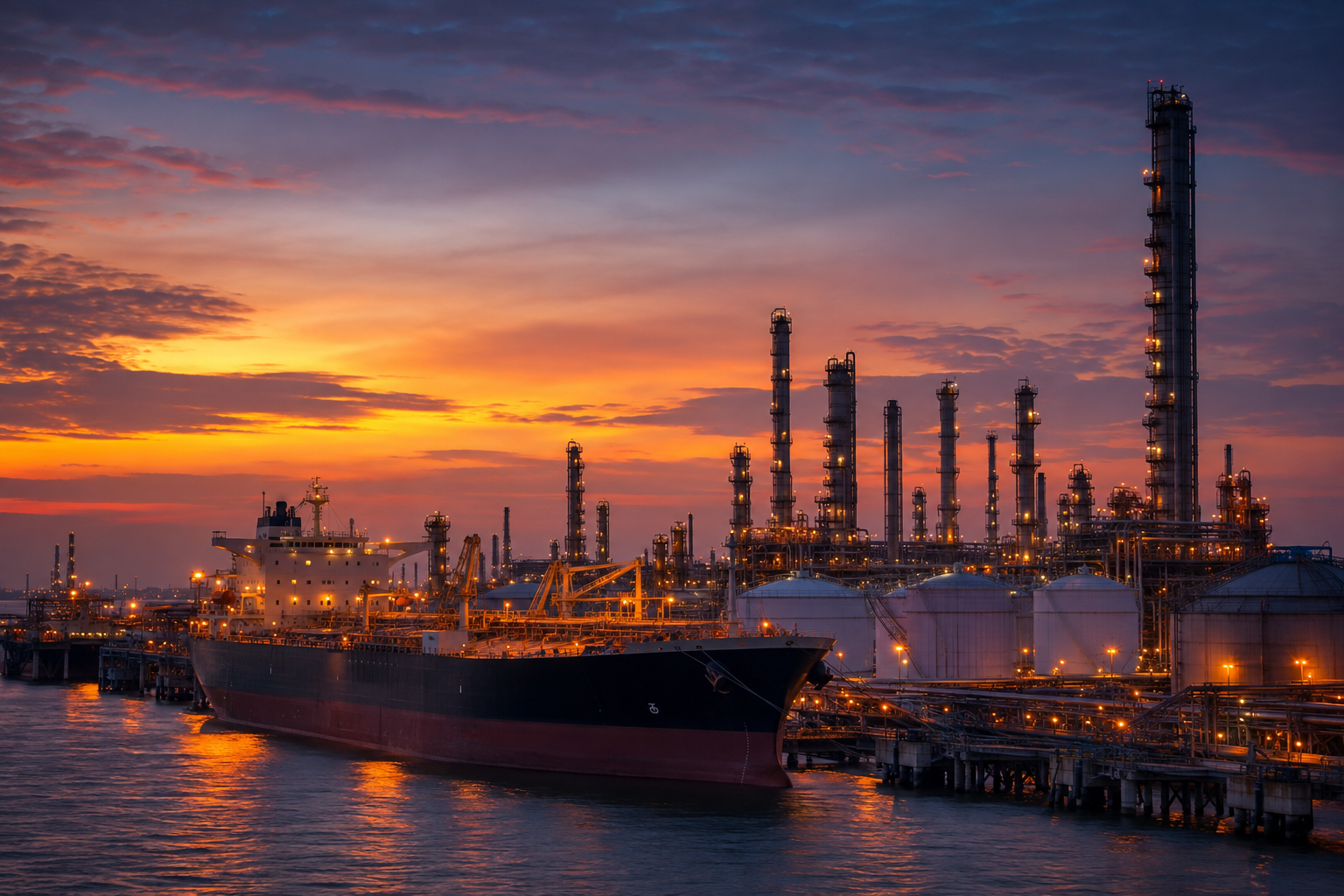
Aramco Reports Blowout Second-Quarter Earnings
Aramco Posts Record Second-quarter Profits Spurred by Price Surge in US-Israeli War with Iran Essay
Saudi Aramco, world’s largest oil producer and exporter, has recorded a significant jump in profits for the second quarter of 2026, as the company capitalizes on the price shock on the market caused by the ongoing war between the US-Israel and Iran.
The state-owned company reported a net income of 122.6 billion riyals ($32.7 billion), during the April-June period, compared to 85 billion riyals for the same period in 2025, an increase of about 44 percent in riyals. Net income, on an adjusted basis, came to 125.1 billion riyals, compared to the median analyst estimate of 116.9 billion riyals, according to data from 12 analysts. For the second quarter of 2026, compared to the second quarter of 2025, profit would have jumped by about 33 percent, or from $25.2 billion a year earlier to $33.4 billion, compared to the same period last year, according to CNN, which published the results of the company’s work.
Why Profits for Aramco Exploded
Aramco’s profits soared despite considerable obstacles for the company as Iran’s closure of the Strait of Hormuz, through which 20 percent of global oil shipments pass, and attacks on Saudi ships in the Red Sea by the Houthi rebels could have halted Saudi oil exports. However, Aramco’s East-West pipeline enabled the company to bypass the Hormuz Strait and thus maintain oil exports through other channels, avoiding significant losses. The president and CEO of Aramco noted this factor as one of the reasons for the increase in profits, as well as the increased demand for refined products. He pointed out that uninterrupted oil exports through the East-West pipeline accounted for part of the record-breaking results, despite the impending danger to the global oil supply.
According to Rystad Energy upstream research chief Rahul Choudhary, another factor increasing profits is the change in the mix of products sold by Aramco, which has switched to a more profitable diesel fuel as compared to before the war, reported CNN.
On Tuesday morning, Brent crude oil – the global oil benchmark – traded just below $70 a barrel before the US-Israeli conflict with Iran began. Prices have since swung sharply — spiking into triple digits, retreating, and moving on every twist in ceasefire or peace talks — and were trading close to $80 a barrel, or 14 percent above where it was before the war began.
Trump Goes After Oil Companies for “War Profiteering”
Aramco’s profits came out on the same day that President Donald Trump accused oil companies of “war profiteering” and taking advantage of higher prices of hydrocarbons for their profit. During his remarks to reporters, Trump stated that he does not want oil companies to profit from the war by raising prices when supplies are limited. In a similar vein, President Joe Biden criticized energy companies for “war profiteering” at the end of last year, after Russia invaded Ukraine and hydrocarbon prices skyrocketed in response to the military conflict. After his return from the kingdom, President Biden accused oil companies of “war profiteering” and announced a windfall profits tax on energy companies.
Trump faces the same dilemma as his predecessor, only with the opposite political polarity. With gas prices at a record high, Republicans find themselves under pressure from presidential candidates who promise to bring down the costs in the lead-up to the congressional midterm elections in November. With a potential Democratic sweep in the offing, according to opinion polls, Trump may feel obliged to go after oil companies in the context of the Israel-Iran confrontation.
Aramco Is Not Alone: Big Oil Posts Record Profits, Too
Aramco is by no means an exception in the energy sector, as several major US and European oil producers also posted record-breaking profits this week:
ExxonMobil’s profits for the second quarter of this year surged more than twice to $14.5 billion.
Chevron’s profits jumped nearly four times to $12 billion from $2.5 billion.
BP posted almost $6 billion in profits for the April-June period, compared to about $3 billion for the same period last year.
Thus, while energy companies enjoy historic profits due to record-high oil prices, voters suffer from the soaring cost of gasoline at the pumps ahead of the congressional elections.
What It Means for the Saudi Economy
Higher profits from Aramco will have a positive impact on the Saudi budget as Crown Prince Mohammed bin Salman pursues economic reforms that require the resources of the state-owned oil company to achieve its goals. In addition, Aramco’s profits in the first quarter were about $26 billion, or 4.6 percent lower than the same period last year. Weak oil prices dampened the Saudi budget at the beginning of the year. However, the war with Iran has helped the Saudi economy, as the price of oil jumped, increasing Aramco’s profitability.
It is noteworthy that Saudi Arabia has pledged hundreds of billions of dollars in investments in the US as part of the kingdom’s economic diversification strategy. This also explains the close relationship between Aramco and the Trump administration.
Key Takeaways
Aramco’s net income for the second quarter of this year came to about $32.7-$33.4 billion riyals, surpassing analysts’ expectations.
The increase in profits was driven not only by soaring oil prices but also by record production rates.
Aramco’s East-West pipeline allowed the company to offset the loss of the Hormuz Strait as a transportation route.
President Trump criticized oil companies for “war profiteering” and accused them of manipulating prices at gas stations.
Exxon, Chevron, and BP are among the US energy companies whose profits from oil sales in the second quarter of this year rose by more than 30 percent.
This article was written using publicly available information about Aramco’s profits for the second quarter of this year, as well as reports about the US-Israeli war with Iran and the impact of the conflict on the global economy.
The state-owned company reported net income of 122.6 billion Saudi riyals (about $32.7 billion) for the April-to-June period, up from 85 billion riyals in the same quarter last year — a roughly 44% year-over-year increase in riyal terms. On an adjusted basis, stripping out one-off items, net income came in at 125.1 billion riyals, comfortably ahead of the median analyst forecast of 116.9 billion riyals compiled from 12 estimates.
Measured in dollar terms against last year’s US-denominated figure, the increase works out to roughly a 33% jump, from $25.2 billion a year earlier to $33.4 billion this quarter, according to CNN’s reporting on the results.
Why Aramco’s Profits Are Surging
The earnings beat came despite serious operational headwinds. Iran’s blockade of the Strait of Hormuz — the narrow waterway through which a huge share of the world’s seaborne oil passes — and attacks on Saudi vessels in the Red Sea by Yemen’s Houthi rebels both threatened to disrupt Aramco’s exports during the quarter.
Instead, the company leaned on its East-West pipeline network, which lets it move millions of barrels of crude across the kingdom without transiting Hormuz at all, helping it maintain output and shipments through the disruption. Aramco’s president and CEO credited that infrastructure with keeping operations running smoothly despite what he described as an unprecedented supply shock.
Analysts also pointed to a shift in Aramco’s product mix as a factor. Rahul Choudhary, vice president of upstream research at Rystad Energy, noted that Aramco boosted earnings in part by exporting more higher-value refined products such as diesel rather than relying solely on crude sales.
Brent crude, the global oil benchmark, was trading just under $70 a barrel before the US-Israeli conflict with Iran began. Prices have since swung sharply — spiking into triple digits, retreating, and moving on every twist in ceasefire or peace talks — and were trading close to $80 a barrel as of Tuesday morning, roughly 14% above pre-war levels.
Trump Calls Out Oil Companies Over “War Profiteering”
Aramco’s results landed the same day President Donald Trump publicly criticized energy companies for what he called excessive profits tied to the conflict. Speaking to reporters, Trump said he doesn’t like it, adding that oil firms are making too much money off a supply shortage.
The comments echo a familiar political playbook: after Russia’s 2022 invasion of Ukraine sent energy prices soaring, then-President Joe Biden accused producers of war profiteering and floated a windfall tax on their earnings. Trump now finds himself navigating a similar dynamic, but from the opposite side of the aisle and with his own political calendar in mind — high gasoline prices are shaping up as a liability for Republicans ahead of November’s midterm elections, with current polling suggesting Democrats could make significant gains in Congress.
Aramco Isn’t Alone — US Oil Majors Post Massive Gains Too
Aramco is far from the only company cashing in on wartime energy prices. Several major US and European producers have posted outsized results in recent days:
- ExxonMobil — second-quarter profit more than doubled to $14.5 billion compared with the prior year.
- Chevron — earnings soared nearly 400%, climbing to $12 billion from $2.5 billion a year earlier.
- BP — reported close to $6 billion in profit for the April-to-June period, roughly double what it earned in the same quarter last year.
Together, the results paint a picture of an oil sector reaping outsized rewards from a geopolitical crisis, even as rising pump prices squeeze consumers and complicate the political landscape heading into the midterms.
What It Means for the Saudi Economy
The bumper quarter is a boost for Saudi Arabia’s state finances and Crown Prince Mohammed bin Salman’s ambitious economic diversification agenda, much of which depends on Aramco’s cash flow. It also marks a turnaround from earlier in 2026: Aramco had posted a first-quarter profit of roughly $26 billion, down 4.6% year-over-year, as softer global oil prices weighed on the kingdom’s development plans before the Iran war reshaped the market.
Saudi Arabia has also pledged hundreds of billions of dollars in investment in the United States as part of its broader relationship with the Trump administration, adding another layer to how Aramco’s fortunes and US politics are increasingly intertwined.
Key Takeaways
- Aramco’s Q2 2026 net income rose to about $32.7–33.4 billion, beating analyst expectations.
- The war-driven spike in oil prices, not just higher output, is the main driver of the profit surge.
- Aramco’s East-West pipeline helped it sidestep the worst effects of the Strait of Hormuz blockade.
- Trump publicly criticized oil companies for high profits, a politically sensitive issue ahead of the midterms.
- Exxon, Chevron, and BP all posted similarly outsized profit gains this quarter.
This article is based on public reporting on Saudi Aramco’s Q2 2026 earnings release and related coverage of the US-Israeli war with Iran and its impact on global energy markets.

