
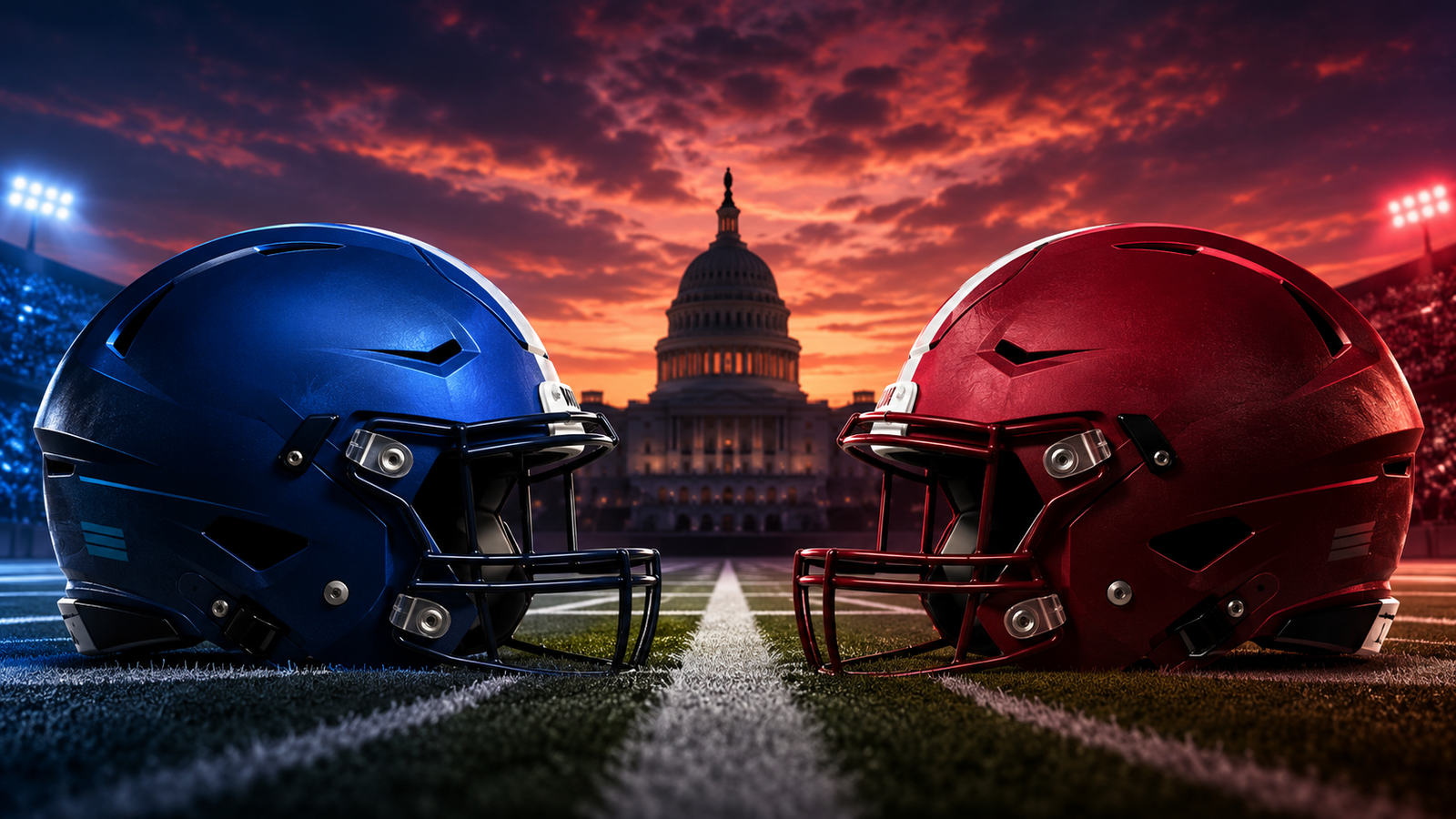
Big Ten commissioner Tony Petitti responds to SEC “breakaway” rumors, saying that Congress should decide it, not the NCAA
BIG TEN commissioner Tony Petitti had the chance to put out a fire this week, during the media days in Chicago, that has grown out of control since last week’s SEC Media Days in Tampa.
What caused the “breakaway” issue to erupt?
It started when SEC commissioner Greg Sankey confirmed that his colleagues had had serious conversations about governance options that would take games away from the NCAA. Subsequently, Sankey tried to temper the issue, saying that the SEC does not want to decouple from the NCAA, but the damage was done. The phrase “decoupling from the NCAA” suggests a complete separation of the SEC from the NCAA, which would presumably allow each conference to dictate its rules regarding eligibility, recruiting, spending, and everything else without regard to the other.
This could have manifested itself in one of two ways. The first would have been for the SEC to write and enforce rules specific to its members, and to play its games, plus those of other conferences that agreed to such an arrangement. The more extreme scenario would have seen the SEC form an exclusive division, playing only against itself, and with its champion facing off against the champion of another division, say the Big Ten, in some sort of showcase game outside the NCAA framework.
Petitti’s response to questions about a potential SEC “breakaway” was that the idea was unnecessarily loaded, and that rules specific to conferences would not necessarily lead to teams from different conferences not being able to play each other.
His preferred option is for Congress to pass the Protect College Sports Act, which would establish federal rules for things like name image and likeness deals, roster continuity, eligibility requirements, etc., currently dictated by a mishmash of state laws and NCAA regulations. According to Petitti, the latest version of the bill will include concessions on a number of issues, including those on which the SEC and Big Ten disagree, notably the formation of a super conference along the lines of the NBA, restrictions on communication with recruits before enrollment, and additional flexibility in terms of spending limits to retain players.
However, this is not necessarily the end of the road, and Petitti made it clear that the Big Ten would turn to more direct negotiations with the SEC, other conferences, and the NCAA, to negotiate a change in the status quo, should the Protect College Sports Act not pass or adequately address the issues.
Time is of the essence for passing legislation, as Congress is set to go on recess, and if the Protect College Sports Act is to have a realistic chance of passing before this happens, it will have to do so soon. This is what has driven both the SEC and the Big Ten to simultaneously push for the passage of this law while also discussing a potential new governance framework, should this option fail to materialize.
Other recent developments suggest that Petitti and Sankey have agreed to oppose any external attempts to form a “super league” for college football.
This meeting in Nashville appears to have served to discuss the possibility of a joint response to any attempts by third parties to organize college football, including the introduction of new financial models, which neither the SEC nor the Big Ten appears to be enthusiastic about, despite the NCAA’s inability to keep up with changing circumstances. Sankey has been particularly vocal about the inadequacy of the NCAA’s council system for Division I, suggesting that it should be replaced by another model.
What does all of this mean for college football fans?
At the moment, it is not looking very likely that the SEC or the Big Ten will completely break away from the NCAA, as both tend to prefer a legislative or regulatory solution to the current impasse, whether federal or state. However, the issue of separation from the NCAA will likely resurface, as neither conference is particularly happy with the status quo, and Congress will have to rush to find a solution before its recess. It is this struggle that is likely to dominate the public discourse on college football in the near future, and it is difficult to say with any degree of certainty how it will end. For now, let us quote Petitti on the issue, as he spoke to reporters at this week’s Big Ten Media Days in Chicago.
Based on his answers, as well as Sankey’s responses to similar questions at last week’s SEC Media Days in Tampa, we can surmise that for now, the situation is much more likely to evolve into a legislative or regulatory battle, rather than a “breakaway” scenario.

